In the early years of the 20th Century, having shunned the family cigarette business, Heinz Lewin was one of Germany’s most successful composers, with a string of successful operettas to his name.
The emergence of cinema saw him turn his hand to the new medium and he soon established himself as a leading composer of film scores. His music even appeared in Hollywood movies.
However, the 1930s saw his fortune change. When the Nazis took power, he was forced to compose under a different name, Heinz/Henri Letton and, ultimately, he fled Germany eventually settling in Paris.
The Nazi invasion in May 1940 saw Heinz interned as an enemy alien. For two years, he toiled in the labour camp of Septfonds. But he found a glimmer of light in the darkness, composing new songs to raise the spirits of his fellow internees.
Indeed, with permission from a benevolent commandant, he and the other prisoners even put on shows which were performed both for guards in the camp and for VIPs in nearby towns, with Heinz as Musical Director.
The clock, though, was ticking and in August 1942 the orders came through from the architect of the Holocaust himself, Adolf Eichmann: Two hundred Jews from Septfonds , Heinz among them, were to be ‘deported’.
While he would not disobey Eichmann, the camp commandant nonethless displayed his humanity and appreciation for his prisoners’ talents. He delayed the deportation by two days, so Heinz and the camp orchestra could perform one final show before they were sent to Auschwitz.
Heinz Lewin
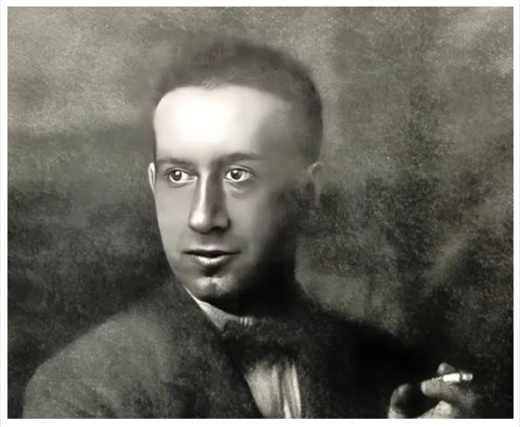
In the early years of the 20th Century, having shunned the family cigarette empire, Heinz Lewin was one of Germany’s most successful composers, with a string of successful operettas to his name.
The emergence of cinema saw him turn his hand to the new medium and he soon established himself as a leading composer of film scores. His music even appeared in Hollywood movies.
However, the 1930s saw his fortune change. When the Nazis took power, he was forced to compose under a different name, Heinz/Henri Letton and, ultimately, he fled Germany eventually settling in Paris.
The Nazi invasion in May 1940 saw Heinz interned as an enemy alien. For two years, he toiled in the labour camp of Septfonds. But he found a glimmer of light in the darkness, composing new songs to raise the spirits of his fellow internees.
Indeed, with permission from a benevolent commandant, he and the other prisoners even put on shows which were performed both for guards in the camp and for VIPs in nearby towns, with Heinz as Musical Director.
The clock, though, was ticking and in August 1942 the orders came through from the architect of the Holocaust himself, Adolf Eichmann: Two hundred Jews from Septfonds , Heinz among them, were to be ‘deported’.
While he would not disobey Eichmann, the camp commandant nonethless displayed his humanity and appreciation for his prisoners’ talents. He delayed the deportation by two days, so Heinz and the camp orchestra could perform one final show before they were sent to Auschwitz.
Morgen Weider Lustik
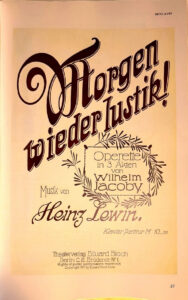
More than 80 years after Heinz Lewin performed his music for the very last time, just days before being deported to Auschwitz, Morgen Wieder Lustik (Tomorrow Will Be Cheerful Again) sees Heinz take to the stage and share his life story with the audience, treating them along the way to some of his most beautiful melodies.
Written by his great-grandson, scriptwriter and journalist Zeddy Lawrence, the three-act play takes its name from one of Heinz’ operettas.
“It seems a particularly apt title,” reflects Zeddy, “given that Heinz lost his life in the Holocaust and that his songs, once so popular, were long forgotten. That he and his music are now being rediscovered means the joy that he sought to bring to the world are with us once more.”
As well as the tunes, Morgen Wieder Lustik also seen Heinz entertain the audience with his insights and memories. Among his anecdotes, the composer, who used to write music with a parrot perched on his shoulder, recalls his family business – one of the most successful cigarette manufacturers in Germany – and reveals his surprising connection to the 1997 blockbuster movie Titanic.
But his brilliance and bonhomie are overshadowed by the march of history, his decline and fate emblematic of so many other artists and creatives who fell prey to the Nazis.
The play draws on research by Zeddy’s brother Rabbi Jeremy Lawrence and his mother Yvonne Mocatta, who was deprived by the Holocaust of ever meeting her grandfather Heinz.
Morgen Wieder Lustik features Zeddy in the role of Heinz, with musical accompaniment from acclaimed pianist and performer Tomi Kalinski, former musical director for the late Barry Humphries.
More dates will be added as they are scheduled.
The show runs for 80 minutes.